
Ryan Fazio Leads a GOP Slate Facing an Ironclad Challenge
Republican Ryan Fazio heads for the stage with his fiancée Amy Orser after earning his party’s nomination for Governor at the Connecticut Republican Convention on May 16, 2026, at Mohegan Sun. Source: Mark Mirko at Connecticut Public
Overview
State Sen. Ryan Fazio (R-Greenwich) leads a Republican slate of statewide challengers in November, facing a difficult challenge in a state dominated by Democrats in both the legislature and statewide.
Republicans have not won a statewide race in Connecticut since Governor Jodi Rell’s 63-35 landslide victory in 2006. Republicans have not won one of Connecticut’s row offices since 1994, when Republican Chris Burnham defeated Democratic incumbent Joseph Suggs Jr in a 53-45 victory for Treasurer.
The State GOP dominated the governor’s office from 1994 to 2010. Since 2010, Republicans have had numerous close races, including three consecutive governor’s races decided by less than 4 points in 2010, 2014, and 2018. In 2016, Republicans managed an 18-18 tie in the State Senate, and only a 72-79 deficit in the State House.
We covered in our State Senate Ratings Forecast last month how these numbers have dwindled in past cycles, where Democrats now hold supermajorities in both chambers of the Connecticut General Assembly and every statewide office. How do Republicans gain back some relevance in the state? It starts with the statewide slate, notably with the candidate leading the ticket. We will go through a brief biography of Fazio, and then discuss if he has a chance in November.
Let’s get started!
Fazio Personal Background
Ryan Fazio was born in Norwalk and grew up in Greenwich, where he graduated from Greenwich High School in 2008. He later earned a BA in Economics from Northwestern University in 2012. He is a known New York sports fan.
Fazio’s professional background includes time in the private sector as a former renewable energy professional and shipping professional. The company is a large ethanol biorefinery facility where he managed commercial operations, logistics, and market risks. The company processed, stored, shipped, and traded energy worldwide. Fazio also worked at a small venture capital firm that invests in small and medium-sized businesses, where he advises their management to help them grow. He resigned from the firm in February to devote himself full time to his gubernatorial campaign.
The senator has also spent several years volunteering at an inner-city charter school. Fazio served on the leadership of the Associate Council of the KIPP Charter school network. Locally, he has volunteered for Greenwich United Way and Meals on Wheels.
Political Background
State Sen. Ryan Fazio (R-Greenwich) has made a rapid rise in Connecticut politics. At 36, he will be the youngest major party nominee for Governor in the country. In addition, he is the youngest candidate to win the Republican Party endorsement since John Rowland won the endorsement in the 1990 Governor’s race.
Fazio won 92% of the convention vote in May after a scandal derailed frontrunner Erin Stewart. Many expected him to face a tough primary in August against Stewart, but the scandal caused many Republicans to coalesce around him.
Fazio, like many Greenwich politicians, got his start in politics as a member of Greenwich’s Representative Town Meeting, where he served in District 12, winning his first term in 2019. In 2020, he won the Republican Party endorsement in the 36th State Senate seat to face Democratic Incumbent Alex Kasser. Fazio lost narrowly 49-51.
However, in 2021, Fazio received an unexpected opportunity after Kasser resigned, triggering a special election. He won the special election 50-48 against Democrat Alexis Gevanter. In 2022, Fazio won his first full-term by a mere 89 votes in a 50.1-49.9 victory against Democrat Trevor Crow. In 2024, Fazio faced heavy spending and a difficult challenge from Democrat Nick Simmons, resulting in one of the most expensive state legislative contests in state history. Even though Kamala Harris carried his district by a 58-41 margin, Fazio won 52-48, his best performance yet.
Main Campaign Issues
When Fazio ran in the special election for his State Senate seat in 2021, he named public safety as his most important campaign priority. He followed up with reducing taxes, cost of electricity, and improving access to health care through state regulation improvements. He also wanted to reduce state control over local school and town planning and zoning.
His gubernatorial campaign hits on many of the same points. Fazio, a ranking member of the Energy & Technology Committee in the state legislature, had focused a lot of his campaign on the state’s high energy costs. Fazio argues that Democrats’ policies have led to high electric rates imposing $1 billion in ‘public benefits” onto our residents. Fazio’s plan to cut electrical bills by 20% is to eliminate the public benefits charge, expand natural gas capacity, cut renewable energy subsidies, limit government contracts, and end “inefficient programs” on electric vehicles such as the EV Charging Program and the heat pump installation subsidy.
Fazio, who voted against last year’s passage of HB 8002, a reworked housing bill that would increase the state’s housing supply, was asked at a forum how he would implement the new law he opposed. Fazio said he would focus on cost controls, adding housing supply, and working to respect local control in housing construction.
He also offered a plan to ease CT’s property tax burden. Connecticut’s cities and towns rely heavily on property tax as a major revenue stream. Fazio did not give specific fiscal projections for his plan. A main point of his plan is to tie Connecticut’s chief operating grant for local schools to the rate of inflation and to cap municipalities’ ability to boost local taxes by 2% or the inflation rate (whichever is greater), saying the legislature should not pay for those directives out of the state budget.
The Lamont campaign told the CT Mirror that Fazio and other minority Republicans in the State Senate did not offer a plan to balance state finances and remain cap-compliant within the fiscal guardrails. Fazio argued his plan is achievable by spending less, specifically on Medicaid benefits for undocumented children and allowing the state’s universities and community college system to hold huge reserves. He also added that he could channel millions annually by curbing or ending longstanding tax breaks for nonprofit universities and hospitals.
On immigration, Fazio is in favor of reversing Connecticut’s sanctuary state policy, the 2019 Trust Act, which restricts state and local law enforcement from cooperating or communicating with the Immigration and Customs Enforcement (ICE). Fazio says the issue is that law enforcement should have discretion over people who are here illegally with Class C, D, and E felonies and misdemeanors, and the current law prevents the state from working with federal authorities. He also aims to cut hundreds of millions of dollars he says are being spent on “illegal immigration programs“.
Fazio has proposed overhauling the 2020 police accountability legislation, which he says led to a surge of violence. Fazio hopes to restore standard enforcement and proactive policing capabilities.
Does Fazio have a Chance in November?
During his 2024 campaign, Fazio spent most of his campaign avoiding mentioning Trump in any capacity. If a voter asked how he voted in the previous three presidential elections, Fazio politely declined. The strategy worked out well for Fazio, who won many voters who voted for Kamala Harris in the concurrent presidential election.
While running in the primary for Governor, Fazio said during an interview, “I would love the President’s endorsement.” Fazio stated, I have a great deal of respect for his public service and his willingness to step up.” During a statewide campaign, Fazio will have a lot more trouble distancing himself from Trump. His opponents will be airing that quote all throughout election season.
During his 2024 re-election bid for the State Senate, Fazio focused on bipartisanship and on local and state issues. This is something doable in a local race, much harder to do when you’re the party’s candidate for Governor. It’s a difficult needle to thread.
To broaden his appeal, Fazio will likely have to reassure moderate and independent voters on issues where Connecticut’s electorate differs from the national Republican Party. Fazio has said he supports the status quo on Connecticut’s existing laws protecting abortion access, but he will need to offer some other core issues against Connecticut’s blue-leaning electorate.
He could also emphasize how he will have a Democratic legislature in both the State House and State Senate, and how he intends to work with them to solve the state’s issues. A similar approach has been used by Republican governors including Phil Scott, Charlie Baker, and Larry Hogan. But a charged Democratic electorate in November is unlikely to have similar sentiments in a midterm election against a rather unpopular Donald Trump.
The general election opponent is also important to any path Fazio has in November. One would think, and some Republicans agree, that they would rather face State Rep. Josh Elliott than Governor Ned Lamont in November. The two democrats face off in a primary on August 11th. Lamont is heavily favored, but Elliott has been making gains in recent polling. If Elliott is the Democratic nominee, his more progressive and ambitious platform may allow Fazio a better contrast in the general election. Elliott supported calls to abolish police departments during the 2020 debate over policing, a message that will also be on the air everywhere if Elliott bests Lamont in the primary.
Josh Elliott is also known as one of the most left-leaning members in the legislature, but is also not well-known to a majority of the state’s voters. This would offer an opportunity for Fazio’s campaign to define him quickly. Also without Lamont, Fazio can compete for the Fairfield County base that has heavily split-ticketed for legislative races in past cycles.
If Fazio faces Lamont, the most likely scenario, he will have a lot more trouble trying to define Lamont as the two-term governor. He would have to attack him on the issues, while Lamont can easily point to his accomplishments over his time in office. Also, voters see Lamont as pragmatic and likeable, a difficult quality to change voters’ opinions on.
Conclusion
In any scenario, the Democratic nominee will be heavily favored in November. Fazio has a tough challenge ahead in November. He qualified for public financing earlier this year, and will have an $18,000,000 grant to spend in the general election. How he decides to spend his grant money will be important for leading the Republican slate.
In the 2022 elections, some voters split-ticket on other statewide offices. The best-performing Republican by margin was State Rep. Harry Arora, who lost by 7 to Democrat Erick Russell in the race for Treasurer. In the Governor’s race, Ned Lamont beat Republican Bob Stefanowski by a larger 56-43 margin.
Stefanowski’s 43% is the baseline for Fazio. He will need to do much better in Fairfield County and the state’s suburbs while also increasing turnout in Republican areas.
Whether Fazio can exceed recent Republican performances will largely depend on his ability to appeal to independent and moderate suburban voters while navigating the national political environment. Even under the most favorable circumstances, Connecticut’s Democratic lean means Republicans enter the race as clear underdogs.
Thanks for Reading!
Follow us on Twitter/X for Election Updates: https://x.com/ctelectionguide
Contact the blog at contact@ctelectionguide.com for inquiries, questions, or tips!
Bronin Decides It’s Time: A Generational Challenge
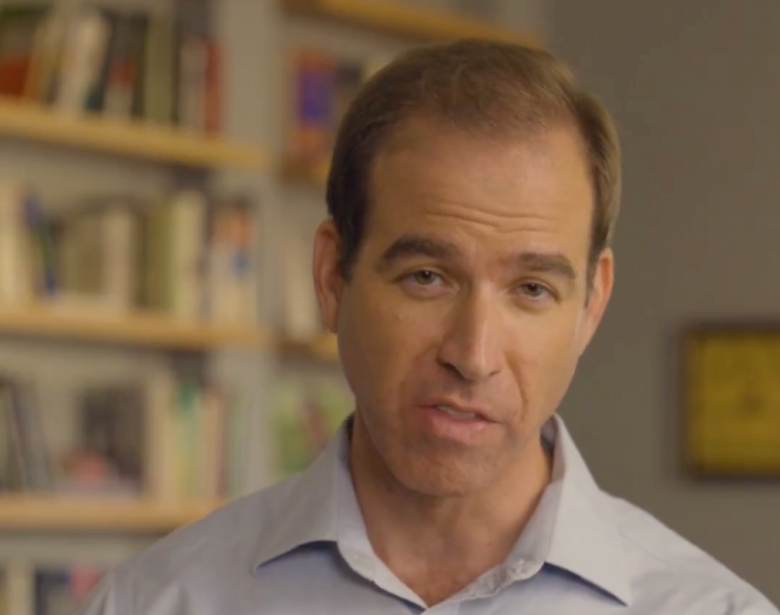
Luke Bronin in his campaign video: Source: Twitter
It’s Happening!
Luke Bronin, the former mayor of Hartford, released a campaign video Tuesday morning announcing a primary challenge to 14-term incumbent John Larson.
Overview
On Monday, I dropped an article discussing the prospects of multiple challengers to Congressman John Larson. I discussed the potential candidacies of Luke Bronin and State Rep. Jillian Gilchrest, who could potentially join a crowded field with Hartford Board of Ed Member Ruth Fortune and Southington Town Councilor Jack Perry.
Now, Bronin has officially thrown his hat in the ring. He is currently Larson’s strongest challenger and will make Larson work for a potential 15th term in Congress.
Larson and Bronin
Larson was reportedly shocked when Bronin asked him to consider retirement. He said, “I thought he was kidding”. When Larson said he was going to run, Bronin told him he was going to run against him.
Larson told a dig at Bronin, offering a “new voice”. He said “You know, it takes work. It takes effort. It takes a plan. We’ve got them, and we’re going to deliver on it,” Larson said. “When you run for public office, it’s about what you’ve been able to deliver, what you’re currently working on today, and what your vision is for the future. What was Mr. Bronin’s?”
Bronin later remarked that he didn’t feel that Larson has the sense of urgency necessary. Larson told reporters how they don’t cover social security enough and the importance of the issue (and his bill on it), saying if Democrats win the House in 2026, he’ll regain his chairmanship.
However, he was unable to win passage when Democrats had unified control in 2021 and 2009, and Democrats won’t have control in 2026. Larson insisted that social security reforms were still possibly, and said next week, a bill will be dropped that addresses it, “first time a leader in the House of Representatives in more than 50 years has been out in front.”. He also hinted that Democratic House Minority Leader Hakeem Jefferies will come to Connecticut on his behalf.
The dam is broken in a state where ambitious politicians have long deferred to the state’s top officials, waiting for an open seat or opportunity. Larson was waltzing his way to another term, waiting to announce a campaign after local elections in November, as he only needs minimal fundraising in this safe Harris 61-38 district. However, these challenges have changed everything, and Larson announced a campaign kickoff next month, but told everyone he will be running again, and that he’s the best for the job.
Personal Background
Luke Bronin grew up in the wealthy communities of Rye, NY, and Greenwich, CT. The son of a doctor and a former teacher. Bronin grew up attending the prestigious Phillips Exeter Academy in New Hampshire. He lated attended recieved his undergraduate degree and law degree from Yale University. He was also a Rhodes Scholar.
Bronin has had many jobs before he became mayor.
He worked as the chief of staff for the president and property casualty operations at the Hartford Financial Services Group. Bronin worked at the US Department of the Treasury during the Obama administration. He was the Deputy Assistant Secretary for terrorist financing and financial crimes. His work involved working on the government’s efforts against regimes in Syria and Iran, blocking money from terrorist groups.
He served in the US Navy Reserve during a deployment in Afghanistan for six months, where he was part of an anti-corruption task force.
Just before his mayoral campaign, he worked as part of then-Gov. Dannell Malloy’s general counsel. He was also a partner in the law firm Hinckley Allen.
Hartford Mayoral Race in 2015
Bronin moved to Hartford in 2006 when his former wife, Sara, got a job the University of Connecticut School of Law. He left in 2009, for work in Washington, D.C, and in Afghanistan. He returned to the city in 2013.
Bronin challenged incumbent Mayor Pedro Seggara in 2015. The city of Hartford has faced many issues over the previous years. In 2010, Mayor Eddie Perez resigned after a conviction on corruption charges. Perez was known as exerting a huge control over the city.
Interestingly, Seggara was known as the opposite. Though he won the 2011 mayoral race, Seggara received a poor reputation as an executive and had poor relations with many of the state’s leaders. He was also seen as a weaker leader.
Seggara used tactics that will likely be used against Bronin in his congressional campaign, such as attacking his privileged upbringing, his background, and the fact that he was an outsider with weak ties to the city. Though it did not work, some of the attacks stuck with Bronin throughout his tenure.
In September of 2015, as expected, Bronin emerged victorious and won the Mayoral Race 55-45 over Seggara.
Mayoral Tenure

Dunkin Park in 2023. A huge economic benefit and developmental liability faced by Hartford: Source: Hartford Courant
Bronin faced immediate issues in a city that faced with some of the poorest precincts in the country. The city’s challenges were endless and difficult to contend with.
Bronin’s biggest accomplishment was likely leading the city out of the verge of bankruptcy by winning passage of state-financed bailout in 2017. He was also able to get business leaders and surrounding suburban communities on his side of the issue, agreeing to help out the city.
Ned Lamont praised Bronin’s tenure in 2022 as he announced he was stepping down. Lamont praised Bronin on helping many business stay in the area, and his better relationships with officals allowed Bronin to secure funding for the city’s infrastructure.
The city has also had many recent development areas for business and new housing. An aggressive push for mixed-income housing occurred. Through this, many communitiy intitvatives have taken place to help discconected youth. Bronin also received praise for his COVID-19 response and his style in informing city residents of the crisis,
Some debate if Bronin really solved the fiscal crisis or just convinced the state to pay for it. There was a debate from many people in surrounding areas whether they had to pay for Hartford’s mishandling of finances prior to Bronin’s tenure. Nevertheless, he’s been given credit for the city’s improved financial situation.
Bronin has also faced criticism for labor relations, due to his initial proposed concessions with city unions. In addition, gun violence and crime remained a large issue through his tenure with a spike occuring soon after the start of the pandemic. The city also faced isues from the developers of the Hartford Yard Goats stadium, and how the pandemic affected office buildings downtown.
Some critics also point to Bronin’s push for market race housing which was not seen as effective. Some felt he should have focused more against landlords.
Strengths of Candidacy
- Profile: Bronin has an appealing profile as a young elected official with a lot of experience. He served in the Treasury Department, had a tour in Afghanistan, and was a Rhodes Scholar. This could allow voters to be comforted by someone who is new, yet very experienced.
- Generational Change: Bronin is more than 30 years younger than Larson. Local voters will be happy to see an experienced candidate who is young and energetic. Bronin says an important reason on primarying Larson is the importance of communication through social media and other means. He says good policy does not get you as far in this environment. I believe this is a good argument to start with. But he has to put out content and positions that prove this point. Bronin, however, is ambitious and has been his entire career, so his energy to the race can help him.
- Connections: Bronin is a state staple who is well-known for being close with elected officials across the state in the district. Some say that he is good at connecting with others. Others note that he has kept up good relations with many leaders in the district, attending events, and keeping up connections. This can help him, as many other leaders in the district will endorse Larson. He can possibly get some endorsements from Hartford and the surrounding areas.
- Name ID and Fundraising: Looking at Bronin’s other opponents. Ruth Fortune and Jack Perry face massive issues in their name ID. No one knows who they are. Bronin’s leadership of the capital city and bid for governor in 2018 make him much more well-known to voters of the local area. Even if State Rep. Gilchrest jumps in, Bronin starts out ahead on a name ID level. For Democratic primary voters, this will help him more. In addition, during his 2015 mayoral campaign, Bronin prepared early and raised more than $800,000 against the incumbent, so his fundraising chops will come in handy for this race.
- First Significant Challenger: Though Larson has other challengers, Bronin is much more well-known than the others. This allows him an early start on fundraising and gives him the mantra of Larson’s main challenger. If someone else jumps in, they would have to compete with the others’ fundraising, with pressure for one of them to drop out to consolidate the Anti-Larson vote.
Weaknessess
- Profile: This can go both ways. Bronin will need to contend with his affluent upbringing and work to carefully make a profile to make residents believe he can understand their issues. Bronin shielded these attacks in 2015 by noting the difficult upbringing faced by his parents and family, and how they worked hard to give him a better life. How can he contend this in 2025, which will likely be similar, but involve a different angle. Bronin, a white-male guy in his 40s, needs to explain to a party of base voters that he can understand the plight of racial minorities in a district with a growing minority population. In addition, Bronin will need to be careful about fundraising, ensuring he gets it from small donors and not corporations or rich donors. Finally, Bronin will need to be careful to not hold an establishment reputation. Though that sentiment decrease with his challenge in the first place, people want someone new, not someone of the past. Bronin will need to prove that he is different than the current Democrats of Washington.
- Big-City Mayor: Being a mayor of a big city as its pros and cons. Facing systemic problems faced by the poorest of state residents is difficult. The city’s crime rates were high. Bronin will have to defend his mayoral tenure, faced by questions about the city’s schools and crime. A city that has faced scrutiny for it. In addition, many public comments about mistakes and governing abilities are likely due to the size of the city. Can Bronin said he made the city better than it was when he left during his eight-year tenure. If he struggles with this answer, people will question why they should make him a congressman.
- Ambition: Political opportunism is common in politics. But how people view is all dependent on the candidate. It’s no secret that Bronin wants to run for governor instead. Will voters not feel like he actually wants to be their congressman over higher aspirations? We won’t know this until the campaign kicks off in earnest.
- 5-Way Race: If this race were between Bronin and Larson, it could be much closer. If Gilchrest jumps into the race, and due to her more progressive reputation in the legislature, is able to take that mantle from Bronin as the change that is needed. She will dominate fundraising nationally over him. Bronin will get caught between them. However, a multi-way race will likely benefit Larson, who can win with a plurality of the vote.
Conclusion
This is a very different environment from when Bronin won his 2015 Democratic primary for mayor. He had the city’s establishment and leaders behind him. He will likely not enjoy that privilege this time. CT Mirror’s Mark Paznikos reports that since Larson’s issues earlier in the year, and the threat of challenges, he’s looks as energetic as ever running around the district.
Larson is a staple in the district. Explaining to voters why they should toss out an incumbent for age reasons only isn’t enough if Larson can prove he’s more effective.
Larson will sweep endorsements of the state’s federal delegation, likely. Local endorsements may vary, as Bronin definitely can get some endorsements from the city. Bronin has a good chance to make this a competitive race, but he needs to clearly define himself as more than a generational change.
Though this is a good start, he needs to start taking positions and try new ideas that either Larson hasn’t talked about, or that his opponents haven’t seized on. Whether it’s a national policy or a local policy, Using his current profile to make himself the favorite of the people willing to vote for change will be necessary.
Most importantly, he needs to do this before (and if) Gilchrest jumps into the race, and seize on this energy. Since Gilchrest has more reputation as a progressive, if that’s the direction he chooses, he needs to affirm if before he gets caught in the middle between her and Larson. If Gilchrest doesn’t jump in, he still needs to build a profile that can appeal to a wide range of residents.
He has a chance to change the dynamics of this district. What I’m sure of he will give Larson a good race. How far can he go?
We have to wait to see how his campaign takes off and the positions he takes. Importantly, how his opponents and Larson will navigate this new field.
Thanks for Reading!